

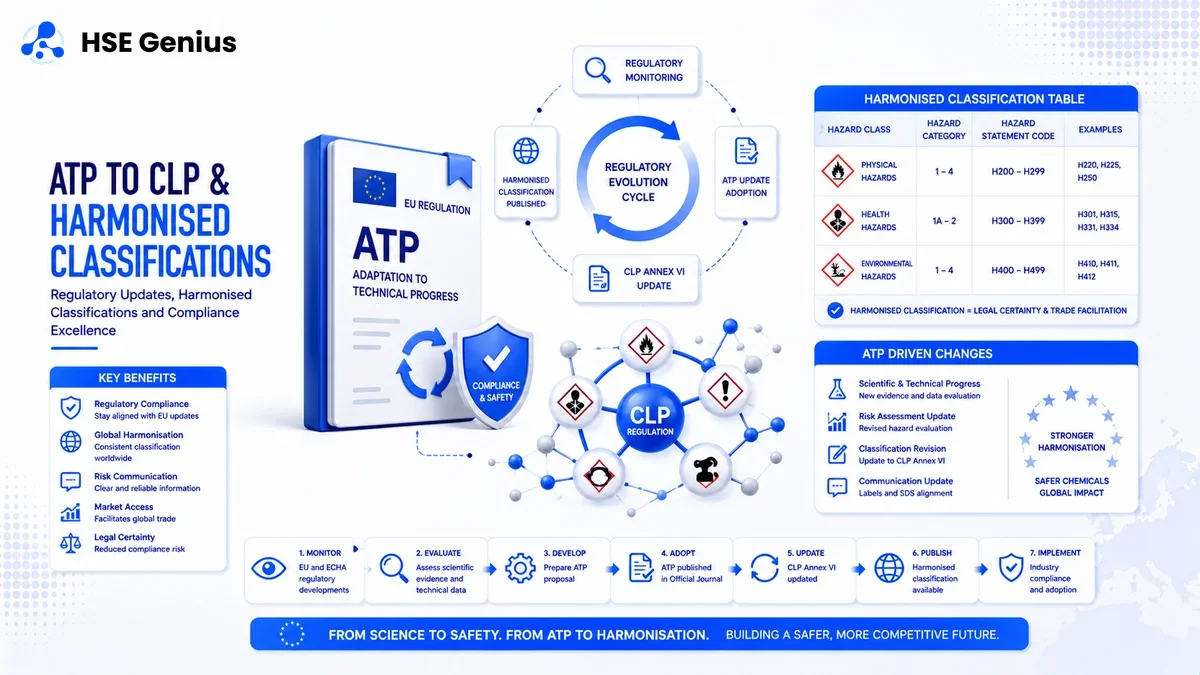
This aspect is particularly relevant in industrial contexts that use numerous formulations, raw materials, or intermediates from various suppliers. In such environments, the timely identification of substances affected by ATPs becomes crucial to avoid discrepancies between composition, classification, labeling, and the SDS.
Once again, the critical challenge lies not just in knowing the regulations, but in managing the process. If ATP monitoring is inconsistent or purely manual, a company risks failing to intercept the impacts on its mixtures in time, thereby maintaining technical documentation that is no longer fully compliant.
ATPs therefore confirm a key principle of modern chemical compliance: the accuracy of Safety Data Sheets also depends on regulatory events external to the product itself. It is not enough to check if the formulation has changed; it is also necessary to verify if the classification framework of the component substances has evolved.