What are EER Codes?
EER Codes (European Waste Catalogue) were introduced to meet a fundamental need: to standardize waste classification across Europe and enable safer, more traceable, and compliant management.**Until the 1990s, each Member State adopted its own criteria, making it difficult to monitor the origin, hazard, and proper disposal of waste, especially in cross-border contexts.
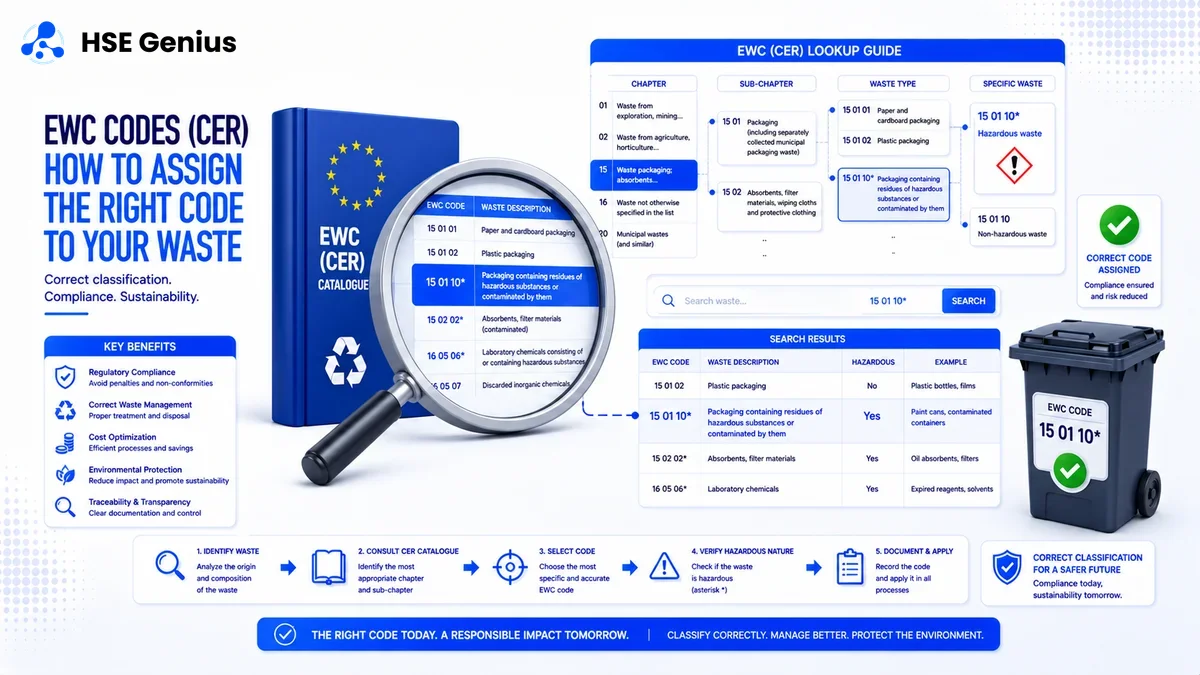
With Decision 2000/532/EC, the European Union established a standardized coding system, now mandatory for all Member States.Each waste stream is identified by a six-digit code that defines its origin, composition, and potential hazard, regardless of the sector of origin: industrial, craft, healthcare, or civil.
This common language is today the starting point for responsible waste management, in compliance with European directives and national environmental laws.
CER stands for “Codice Europeo dei Rifiuti” in Italian, translated in English as EWC – European Waste Catalogue**.
Why they were introduced and what they are for
Before the 1990s, waste management in Europe was fragmented: each country used different nomenclatures, making it difficult to track flows, hazards, and treatment.**The EWC, introduced by Decision 2000/532/EC, harmonized waste classification across the EU.
EWC codes are used to:
- Indicate how to dispose of or recover waste
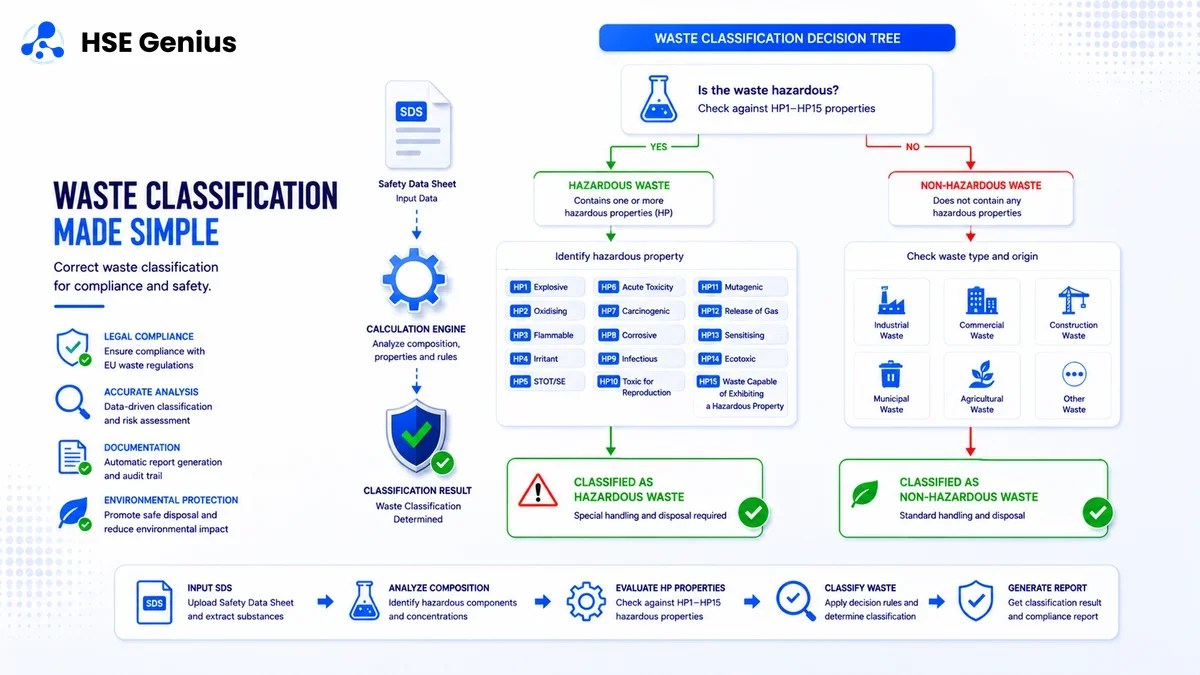
- Assess whether it is hazardous or not
- Determine documentary requirements
- Communicate clearly with authorities, labs, and transporters
Who uses them in practice?
EWC codes are used daily by:
- Companies and environmental managers
- Analytical laboratories
- HSE consultants (Health, Safety & Environment)
- Public authorities and environmental agencies
- Waste transporters
- Disposal or recovery plants
In short: anyone producing, handling, transporting, or treating waste must know and correctly apply EWC codes.
How an EWC code is structured
Each code consists of six digits divided into three pairs (e.g., 04 02 22**), which represent:
PairMeaning04Chapter: generating activity (e.g., waste from leather, fur, and textile industry)02Subcategory: specific waste stream (e.g., textile industry waste)22Waste description (e.g., waste from processed textile fibers)Some codes include an asterisk (*), indicating hazardous waste.
Hazardous or non-hazardous?
There are three types of EWC codes:
- Absolutely non-hazardous – contains no hazardous substances (e.g., 20 01 01 – paper and cardboard)
- Absolutely hazardous – always hazardous (e.g., 14 06 01* – halogenated solvents)
- Mirror entries – may be hazardous depending on chemical composition (e.g., 15 02 03 – 15 02 02*)
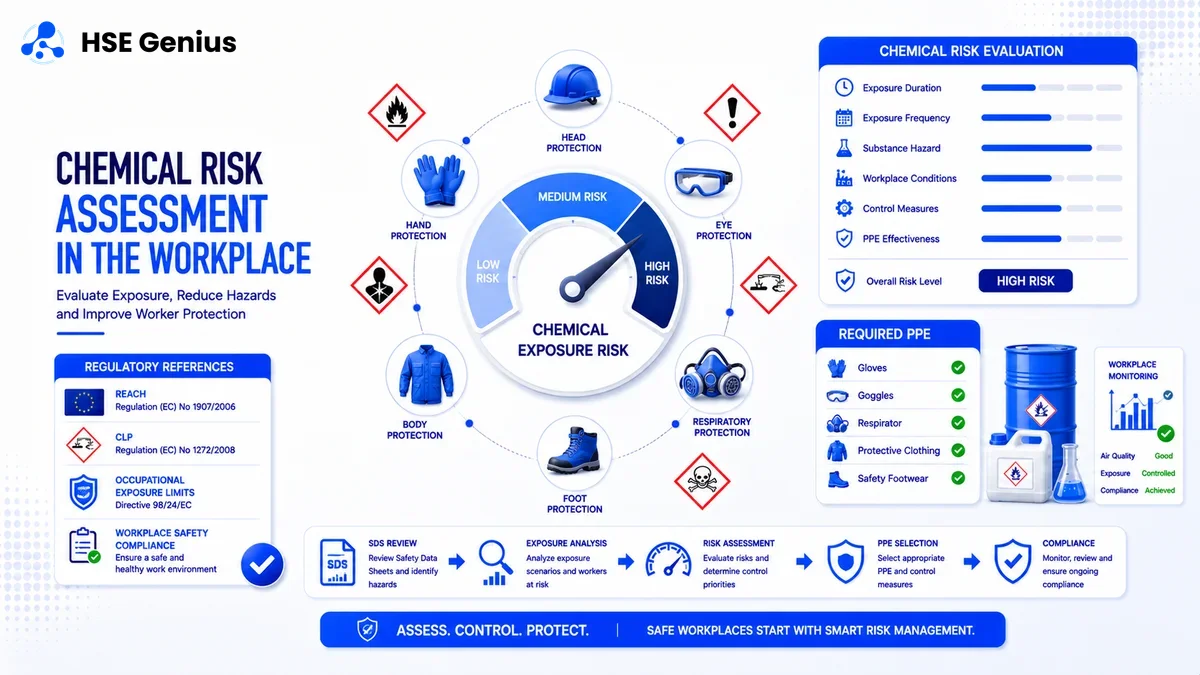
For mirror entries, it is necessary to consult the SDS (Safety Data Sheet), analyze the substances, and evaluate hazard classes (H), which then determine hazard properties (HP).
What HSE Genius can do
Assigning an EWC code may seem simple, but it requires regulatory knowledge, technical reading of SDS, and chemical analysis.HSE Genius automates the entire process:
- Upload the SDS (Safety Data Sheet)
- AI automatically extracts substances and H-classes
- HP hazard properties are calculated
- All data is stored for audits, reports, and traceability
This saves hours of manual analysis and minimizes classification errors.
Practical examples of EWC codes in different sectors
Construction sector
- 17 01 07 – Mixed construction and demolition waste
- 17 02 01 – Wood
Industrial sector
- 12 01 01 – Metal shavings
- 13 01 10* – Contaminated waste oil
Healthcare/pharmaceutical sector
- 18 01 03 – Waste similar to household waste
- 18 01 08* – Cytotoxic or cytostatic medicines
Regulations and useful resources
EWC regulations are defined by:
- Decision 2000/532/EC (and subsequent amendments)
- Directive 2008/98/EC (Waste Framework Directive)
- In Italy: Legislative Decree 152/2006, Part IV – Waste Management Rules
Useful sites for further information:
- Ministry of the Environment – Italy
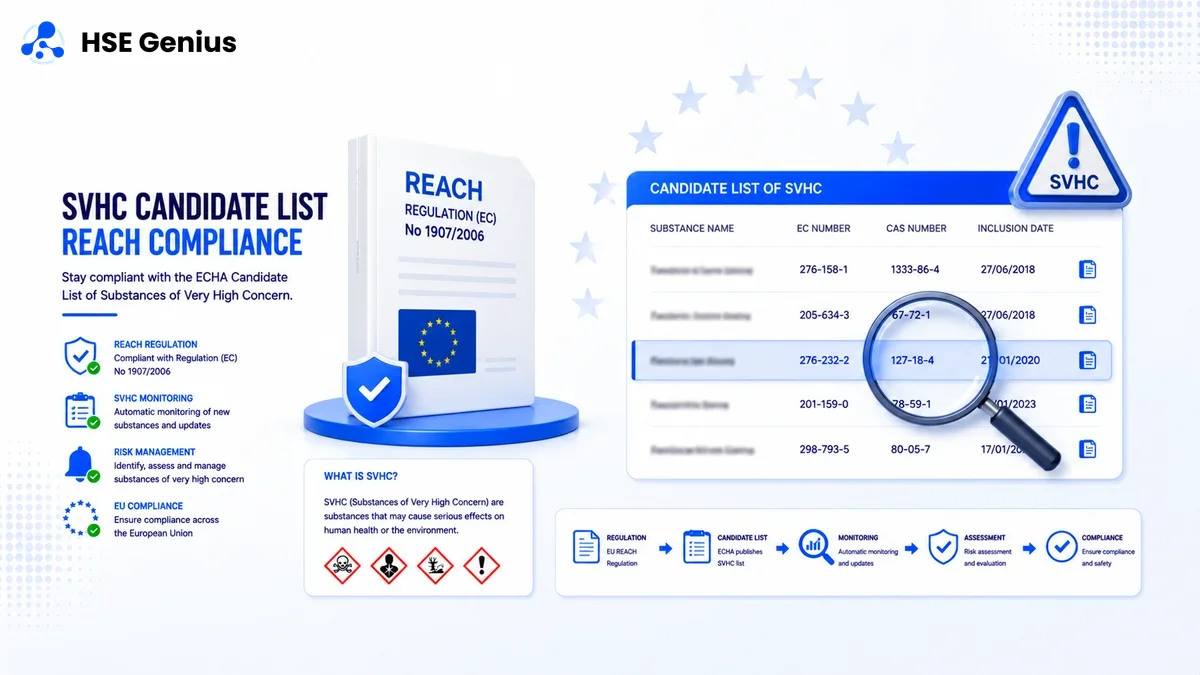
- ECHA – European Chemicals Agency
- Normattiva
- EUR-Lex for European directives
EWC codes represent the European standard for correctly identifying waste and ensuring each stream is managed safely, legally, and traceably.
Assigning the correct code is not just a legal requirement but the first step toward sustainable and responsible waste management, reducing environmental risks and improving internal efficiency.**Understanding code structure, reference regulations, and the difference between hazardous and non-hazardous waste is crucial for anyone working in the field.
Advanced tools like HSE Genius** simplify this process through intelligent automation: from SDS reading to HP class calculation.
👉 With HSE Genius, accessing and using it correctly becomes simple.
**Want to know more?**Request a free demo or contact us to discover all the features.