

Imagine a construction site where every worker wears a smart bracelet
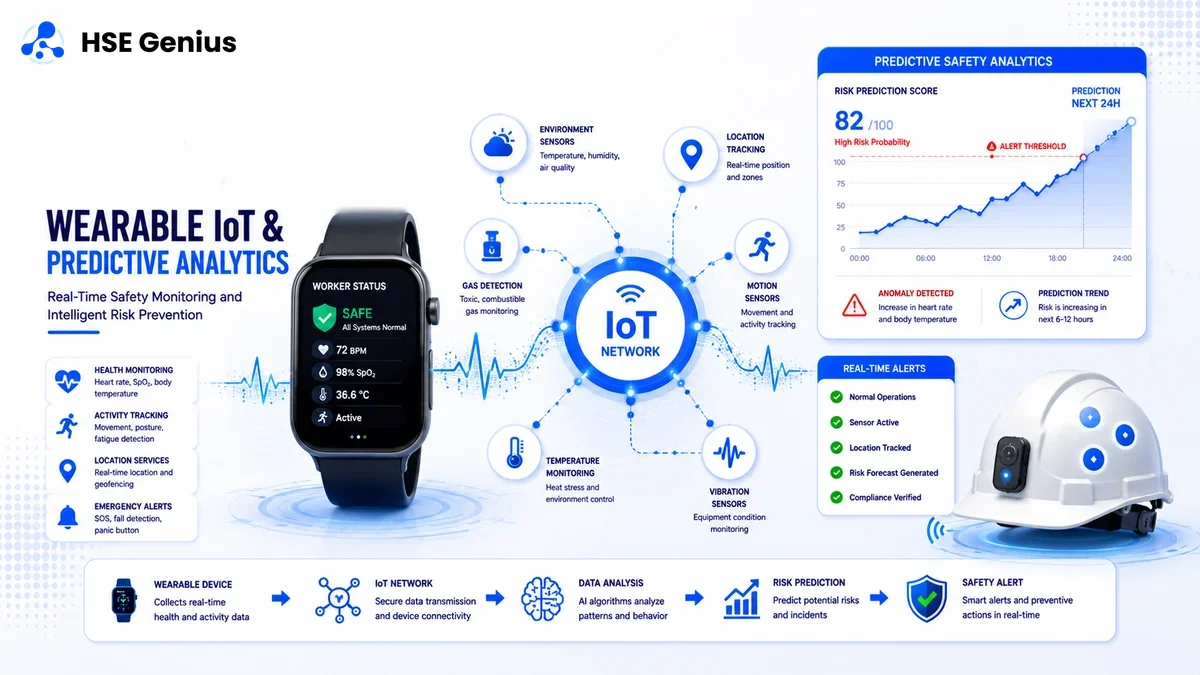
It monitors heart rate, body temperature, and fatigue level. At the same time, environmental sensors report in real time changes in gas, humidity, and external temperature. Thanks to these data, the HSE expert can intervene precisely, schedule targeted breaks, and improve workplace well-being.
Wearable IoT for continuous monitoring
Wearable devices (biometric bracelets, smart helmets) collect vital metrics:
- Heart rate and stress variations.
- Body temperature to identify signs of fatigue.
- Movement and posture to prevent musculoskeletal microtrauma.
In parallel, environmental sensors measure:
- Gas concentrations (CO₂, VOC).
- Humidity and heat levels.
- Air quality in real time.
This information creates a continuous, clear, and consistent data flow, replacing occasional inspections with constant monitoring.
Predictive analytics to prevent every risk
AI applied to IoT data turns numbers into insights:
- Fatigue models detect trends before they lead to accidents.
- Environmental patterns flag critical conditions (e.g., gas buildup) before they reach dangerous thresholds.
- Smart alerts trigger notifications via app or email when an indicator exceeds target values.